Key Highlights
- Discover contrast therapy, the practice of alternating between a hot sauna and a cold plunge.
- This hot to cold plunge method boosts blood circulation and enhances overall health benefits.
- Experience quicker muscle recovery and reduced soreness after intense exercise.
- Cold water immersion sharpens your mental clarity and provides a significant energy boost.
- Combining a sauna experience with a cold plunge strengthens your immune system.
Introduction
Have you ever thought about getting into cold water right after you have been in a hot sauna? This is called contrast therapy. More people now use it because it can be good for your health. When you move from heat to cold, you help your body wake up and work better. This can help your blood flow well, help you heal faster, and make you feel good and fresh.
Understanding Contrast Therapy: The Science Behind Hot to Cold Plunge
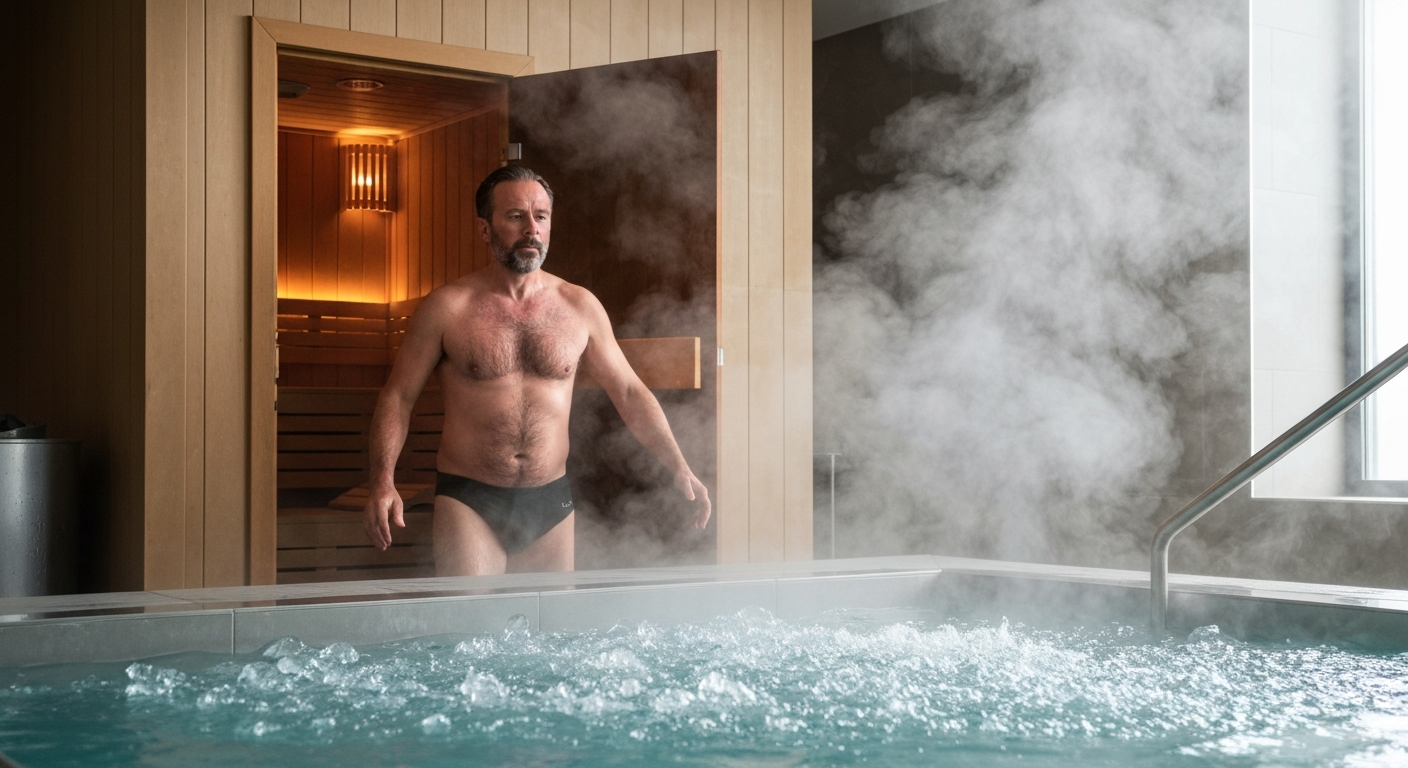
Contrast therapy is a simple and helpful way you can use to feel better. In this method, you first heat your body up, usually by sitting in a sauna. After that, you cool your body down fast, often by getting into an ice bath. You switch between these hot and cold temperatures.
When your body temperature goes up and down quickly, your blood vessels get tight, then relax again. This causes a kind of pumping in your blood vessels. It helps blood circulate better through your body. These changes are good for your mental health as well as your body.
Now, let’s see how each part of contrast therapy works for you.
What Is Cold Plunge Therapy and How Does It Work?
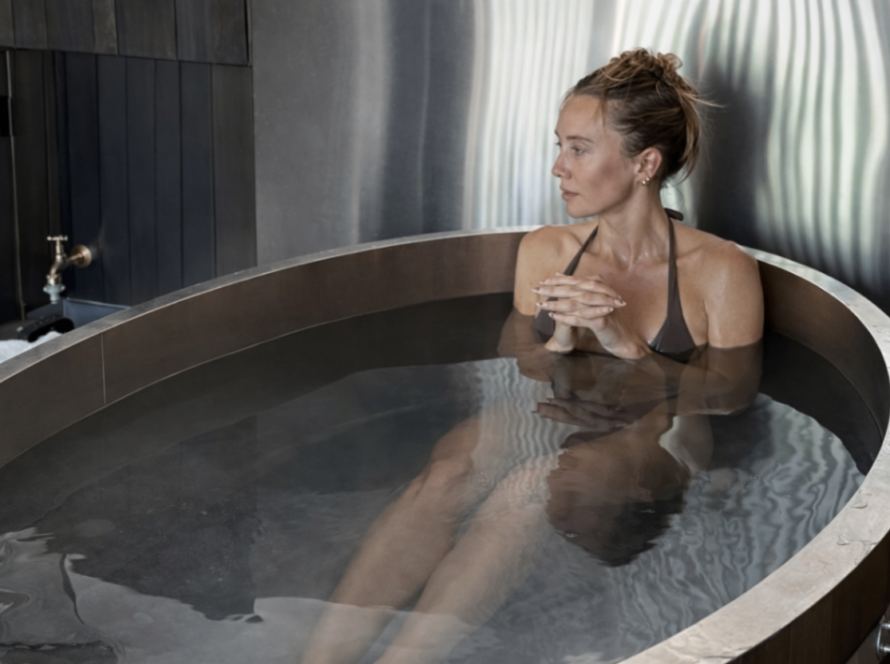
Cold plunge therapy, also known as cold water immersion, means putting your body in very cold water for a short time. People often do this after a sauna or a tough workout.
This cold exposure makes a big change in your body. When you get in the cold water, your blood vessels tighten up. This helps push blood to your main organs. It can wash away things like lactic acid, which builds up in your muscles when you work out.
When you get out of the cold water, your blood vessels open up again. This lets new, oxygen-rich blood flow back into your muscles. It helps your body heal, cuts down on swelling, and is good for your health and well-being.
Key Principles of Hot and Cold Plunge Techniques
To get the most out of contrast therapy, you need to know its main ideas. The aim is to make a big change in temperature so your body reacts.
In this process, you move from the intense heat of a sauna to a cold plunge. This change from heat to cold water is what gives people the key benefits. You can change the water temperature and the time you stay in each step, but the main steps remain the same.
Here are the main steps:
- Heat your body in a sauna. This will raise your core temperature.
- Quickly move to a cold plunge with cold water.
- Stay in the cold water for a short and controlled time.
- Repeat this way as needed for your level.
The Origins and Evolution of Contrast Therapy
The use of hot and cold therapies has a long history. People in ancient Greece and Rome used water treatments to feel refreshed. But the practice is most closely linked to Nordic sauna traditions.
For years, people in Scandinavia have gone from hot saunas straight to cold lakes or snow. They did this not just to clean themselves but to become stronger and feel better in life. Parents taught their children about using hot and cold, and the cycle kept going.
Now, this old idea is called contrast therapy. You can see it being used in physical therapy, sports medicine, and places for wellness all over the world to help people get better and stay healthy. Many modern spas and sports centres now have special sauna and cold plunge sessions for people who want them.
Core Health Benefits of Hot Cold Plunge Therapy
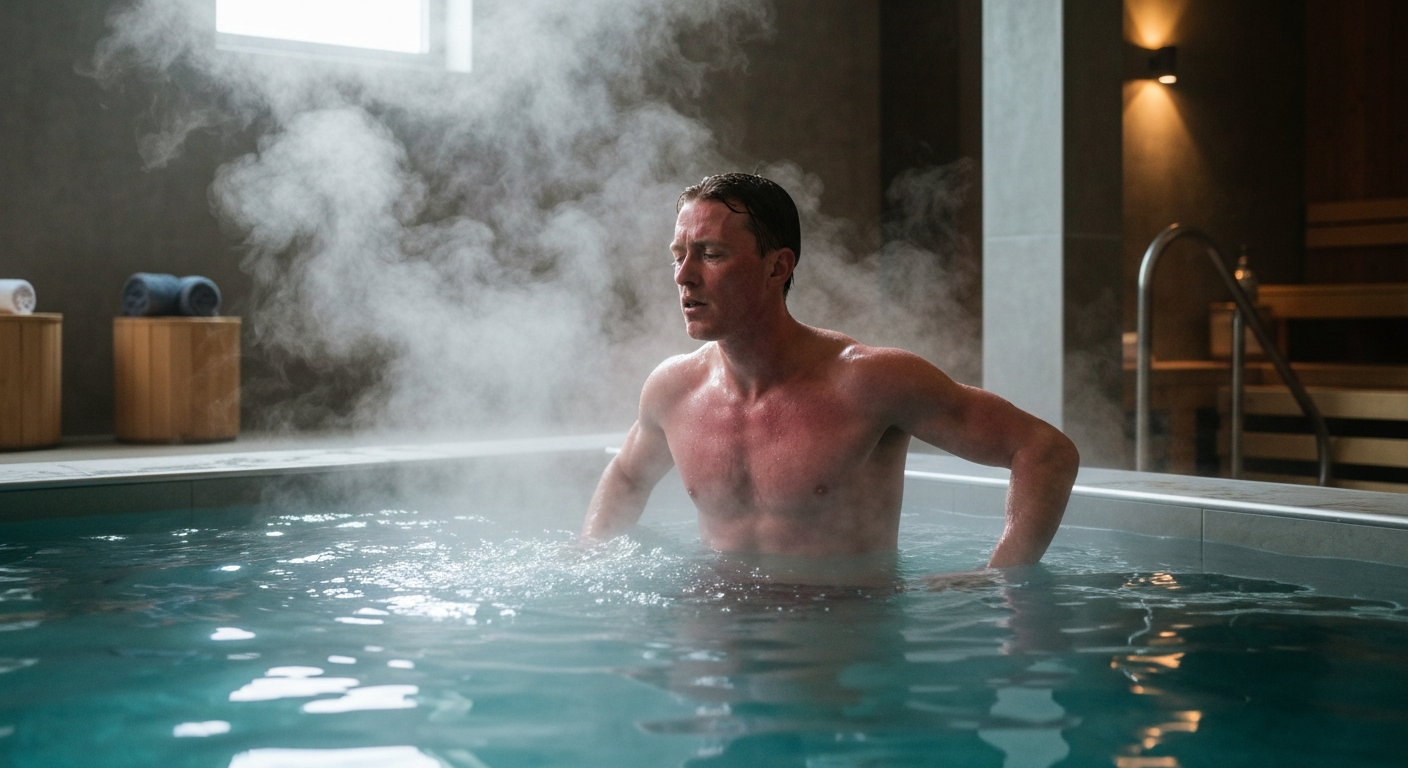
Doing hot to cold plunge therapy brings many health benefits for your whole body. The quick change in temperature acts like exercise for your blood flow. It helps to make your heart and blood system work better, which is good for your cardiovascular health.
People like this therapy because it helps muscle recovery and has mental health benefits. It can make muscle soreness go down. It can also give you more energy and help you focus. These cold plunge health benefits are good for both the body and mind. Let’s look closer at some of these important points about mental health and muscle recovery.
Cardiovascular Advantages and Improved Circulation
Contrast therapy is good for your heart and blood flow. When you sit in the sauna, the heat makes your blood vessels widen. This helps more blood go around your body and can lower your blood pressure for a short time.
Once you step into cold water, your blood vessels get narrow. This sends blood back to the most important parts of your body. Switching between warm and cold is like a kind of workout for the blood circulation in your body.
Doing this often makes your blood vessels work better and get stronger. You may get a more steady heart rate, better blood flow, and less chance of getting heart disease over time.
Boosting Energy and Mental Clarity Through Temperature Changes
Are you searching for a natural way to get more energy and stay focused? When you go into cold water, the body lets out endorphins. These are sometimes called the body’s “feel-good” chemicals. This makes you feel awake right away and may lift your mood.
This type of contrast therapy also makes your nervous system react. This can help your mind work better. Many people say they feel more sharp and have better focus after they do it. The fresh, new feeling will help wake up your mind and your body.
Cold water sessions also can help drop the amount of cortisol in the body. Cortisol is known as the stress hormone. By lowering it, contrast therapy can lessen worry and help your mental health. It’s one way that can clear your mind and help you feel good again.
Enhanced Recovery After Exercise and Sport
If you work out often, you know that muscle recovery matters a lot. Contrast therapy is a good way to help with this. The cold plunge lowers swelling in your muscles after intense exercise.
When you use cold water, your blood vessels get smaller. This makes it easier to flush out lactic acid and other things from your muscles that can cause soreness. You will have less pain and muscle soreness in the days after a hard workout.
Contrast therapy also makes your blood flow better. So, more oxygen and nutrients reach your tired muscles. This helps you heal faster and get back to training sooner. With this, you can keep up your physical performance.
The Role of Saunas in Hot and Cold Plunge Traditions
The sauna experience is the key first step in contrast therapy. The main goal of sauna use here is to give your body steady heat. This makes your core temperature go up by a lot.
Spending time in the sauna gets you ready for the cold plunge. The heat helps open your pores, lets your muscles relax, and gets your blood moving well. This makes the jump to cold water work even better. Now, we will talk about how to make your sauna session the best it can be for good results.
Optimal Sauna Temperatures and Duration Before Cold Plunge
To maximise the benefits of your sauna sessions, it’s important to get the temperature and duration right. The goal is to heat your body thoroughly without overdoing it.
For contrast therapy, the recommended sauna temperature is typically between 70-90°C. You should aim to stay in the sauna for about 10-15 minutes. This is usually enough time to raise your core body temperature and start sweating, preparing you for the cold plunge. The ideal water temperature for the plunge is around 10-15°C.
Here is a simple guide to help you structure your session:
|
Phase |
Temperature |
Recommended Duration |
|---|---|---|
|
Sauna Session |
70-90°C |
10-15 minutes |
|
Cold Plunge |
10-15°C |
1-3 minutes |
|
Rest |
Room Temperature |
2-5 minutes |
|
Repeat Cycle |
N/A |
2-3 times |
How Saunas Prepare the Body for Cold Plunge Therapy
Starting out with a sauna is important because it gets your body ready for the cold. The heat from the sauna experience raises your core body temperature. This is a key part of the process.
When you use the sauna first, it helps make the cold plunge safer and works better. If your body is warm, switching to cold makes the body react more and gives you better results. The heat also helps the muscles relax and opens up the blood vessels.
There will be more blood flow, so more oxygen reaches your tissues. It also triggers the body’s natural stress response, but in a safe way. This helps you cope with the sudden cold and makes the benefits bigger for the body.
Psychological Effects of Combining Heat and Cold
Moving between extreme heat and cold can have strong effects on your mind. Sitting in the heated sauna can help you relax. It also leads to the release of endorphins. This makes you feel calm and good.
After the warmth, taking a dip in a cold plunge wakes you up fast. This quick change helps your mind get a fresh start. The cold can lower your cortisol levels and this brings down stress. You finish feeling like you did something good and strong. This process can build up your resilience.
Facing the cold is hard but doing so boosts your confidence and mental strength. The mental health benefits from contrast therapy are just as great as the health benefits for your body. This makes contrast therapy good for both your mind and body.
Best Practices for Alternating Between Sauna and Cold Plunge
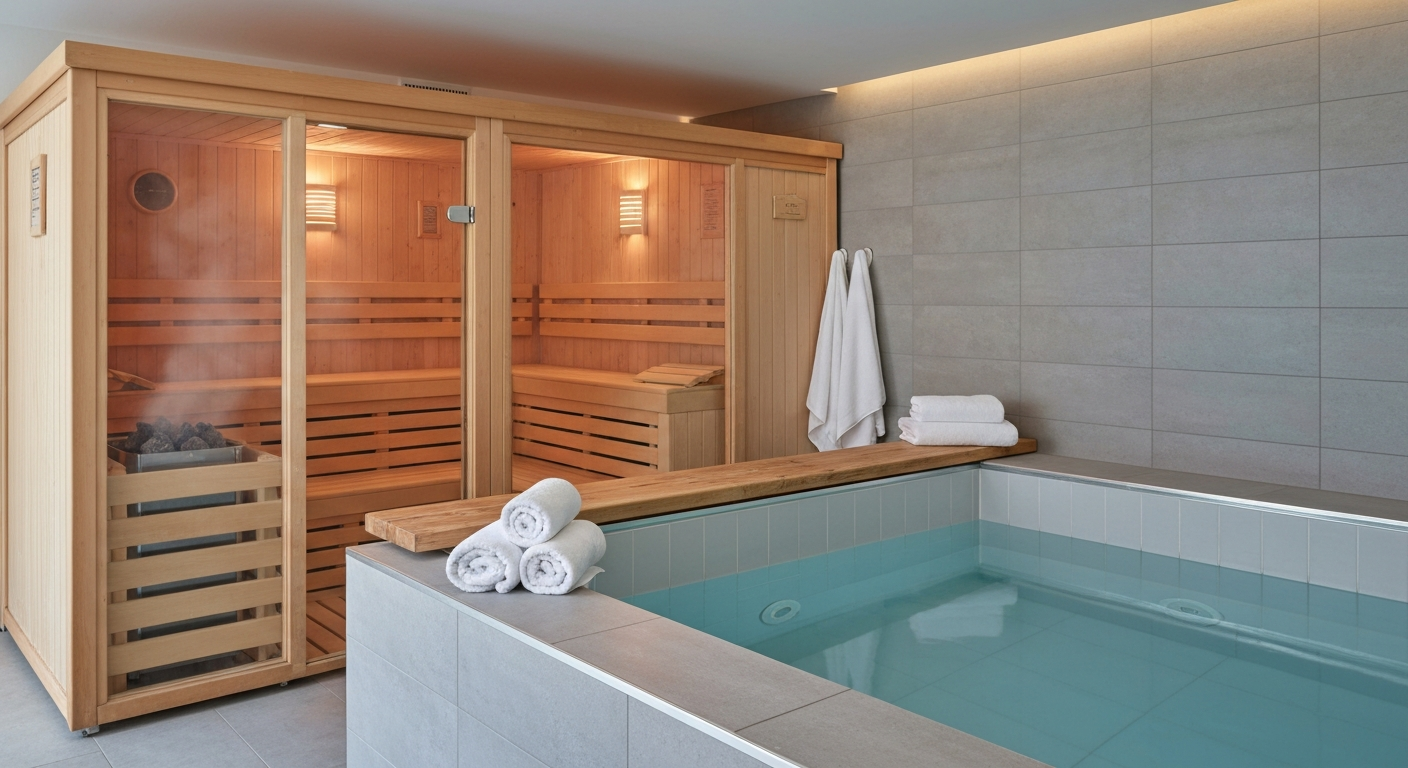
To stay safe while you enjoy contrast therapy, follow some best practices. Always pay attention to how you feel, and do not push yourself too hard, especially at the start.
It’s a good idea to drink plenty of water. Make sure you stay well hydrated before, during, and after your sessions. If you have worries about your blood pressure or other health conditions, it is best to talk to a doctor. Now, let’s look at the steps you can take for a safe and good session.
Step-by-Step Guide for Beginners Starting with Hot Cold Plunge
If you are trying a hot to cold plunge for the first time, it is a good idea to take things slow. The feeling can be strong, so your body needs time to get used to it. This helps make your first time both safe and good.
If you are a beginner, this routine works well when you ease into it. You do not need to jump into extreme hot or cold right away. You can even try a hot shower and then a cold shower to get used to how it feels.
Here is a simple step-by-step guide for your first session:
- Start with a 5-10 minute sauna session at a moderate temperature.
- Follow with a 30-60 second cold plunge or a cold shower.
- Listen to your body and don’t force yourself to stay in the cold if you feel overwhelmed.
- Rest for a few minutes before considering another cycle.
Recommended Session Timing and Frequency for Safe Contrast Therapy
For safe contrast therapy, the timing for each step is important. In a normal session, you move between the heat of the sauna and the cold of the cold plunge more than once.
You can start with 10 to 15 minutes in the sauna. After that, do 1 to 3 minutes of cold exposure. You may repeat this step 2 or 3 times during your session. Do not rush. Make sure you take a short rest between each turn in the sauna and cold plunge to let your body get used to the change.
To begin, try 1 or 2 sessions each week. This helps your body get used to the stress of moving from hot to cold temperatures with cold exposure and contrast therapy. When you feel ready, you may slowly add more sessions if you want to.
Essential Safety Tips and Precautions for Effective Contrast Therapy
While contrast therapy can be helpful, your safety should come first. The very hot and cold temperatures can be risky if you have some health conditions like heart disease or high blood pressure. It is important to be careful.
Before you start, it is a good idea to talk with your doctor. This is important if you have high blood pressure, heart disease, or any other medical conditions. If you are pregnant, you should not use this therapy. Keep drinking water to avoid getting dehydrated from the sauna.
Here are some key safety tips to keep in mind:
- Never do contrast therapy on your own, especially if you are just beginning.
- Listen to your body. Leave if you feel dizzy, lightheaded, or too uncomfortable.
- Do not use alcohol before or during your session.
- Spend only a short time in the cold plunge to cut the risk of hypothermia.
Choosing the Right Setup for Cold and Hot Plunge Therapy
You can try contrast therapy at places that have the right setup. There are also home equipment kits you can buy if you want to do it by yourself. Eco Hearth provides complete sauna and ice bath sets in a variety of sizes, designed to comfortably accommodate different numbers of people.
Setting this up at home gives you the best convenience. If you have the right tools, you can get the benefits of contrast therapy any time you want. Let’s talk about what you should look for when picking out your own setup.
What to Look for in Facilities and Home Equipment in Ireland
When you look at a place, check how clean it is, ask about safety steps, and see the saunas and cold plunges they use. To have a great experience, you want staff who know about the equipment and can help you.
If you want to set something up at home, get equipment that is safe and strong. For any ice bath, you need a unit that works well. It should be simple to clean, good to use, and last a long time. This is what sets Eco Hearth apart. Their ice baths are made by experts to give people the best cold plunge at home. You get high quality and strong build in one package.
Here are some things to think about before you pick your ice bath or other equipment:
- Temperature control and steady cooling.
- The strength and life of the materials.
- How simple it is to clean and care for.
Conclusion
To sum up, trying hot to cold plunge therapy can bring you many health benefits. It can help with better blood flow and give you more mental clarity as well. When you start this way of contrast therapy, keep safety in mind and pay close attention to what your body tells you. It does not matter if you are new or you want to go deeper into it. Learning about the science and the best practices can help you get more out of it. If you’re looking to bring premium hot and cold therapy equipment into your home, submit your inquiry here and take the first step toward better wellness.
Frequently Asked Questions
Is hot to cold plunge therapy safe for beginners?
Yes, it is safe for people who are new, as long as they start slow and follow safety tips. Start with spending less time in the heat and not going too hot. If you have any medical conditions, talk to a healthcare professional before you begin.
How long should you stay in each phase during a contrast therapy session?
A good rule for sauna use is to spend 10 to 15 minutes in the sauna. After this, follow with 1 to 3 minutes of cold immersion. Make sure to pay attention to how you feel. You can change how much time you spend based on what is best for you, especially if you are new to cold immersion or sauna use.
Can contrast therapy help with workout recovery and muscle repair?
Yes, that’s right. Contrast therapy is very good for muscle recovery. It helps cut down swelling and pushes out lactic acid from your muscles. It also makes blood flow better to muscles that are tired. This can help your body heal faster after intense exercise and boost your physical performance.