Key Highlights
- A morning cold plunge can kick-start your day with a boost of energy and mental clarity.
- The health benefits include easing sore muscles, reducing inflammation, and improving your mood.
- Adding a cold water dip to your morning routine may also support your immune system.
- Beginners should start with shorter durations in warmer water, around 10-15°C.
- Safety is key; always listen to your body and consult a doctor if you have health conditions.
- Eco Hearth provides premium ice baths perfect for starting your cold plunge journey in Ireland.
Introduction
Are you trying to find a good way to get your mornings going? A cold plunge could be the thing for you. With cold water immersion, you take a quick dip in icy water. Adding this step to your morning can give you many health benefits. It can change how you feel and work all day. Let’s talk about how you can start with a cold plunge.
Understanding Cold Plunge Therapy for Your Morning Routine
Cold plunge therapy is not just a quick shock to your body. It is a wellness method people have used for hundreds of years. When you add cold water to your morning routine, you get many health benefits before your day even starts.
It helps to know how cold plunge therapy works and why morning is a good time for it. This can show you how to get the most out of this cool and refreshing practice. Let’s see what the science says and what special advantages you get when you start your day with cold water and a cold plunge for better wellness and health benefits.
What is a Cold Plunge and How Does It Work?
A cold plunge means taking a short dip in an ice bath or very cold water. This is a type of cold water immersion. It is not meant to be a long and relaxing soak. The main idea is to get your body into icy water for a short time. This prompts your body to respond quickly.
When you step into the cold water, your body needs to work hard to keep up its core body temperature. This effort is what gives cold plunging many of its health benefits. These include help with physical recovery and can even improve your mental sharpness.
If you want to start a morning routine with a cold plunge and you are new to it, try to take small steps. You do not have to get into a tub full of ice on your first day. Begin with cool water and dip for only a brief moment. Build your tolerance over time as your body gets used to the cold.
The Science Behind Ice Water Plunge Benefits
The way your body reacts to cold therapy can help in many ways. When you step into cold water, the blood vessels in the body get tighter. This causes blood flow to slow down.
Because of this, it can be good for handling inflammation and swelling. That’s why athletes use ice baths to recover. Cold exposure also makes the body give off hormones that make you feel good. Here are some main benefits:
- Reduced Inflammation: The blood vessels get tight and that helps with swelling and soreness.
- Mood Boost: The body releases endorphins and dopamine, which help you feel better.
- Immune System Support: The stress from cold therapy can help the immune system get ready to fight illness.
Why Mornings Are the Best Time for Cold Plunge Sessions
Taking a cold plunge first thing in the morning can help start your day well. When you jump into cold water, the shock makes you alert very quickly. Many people feel that it wakes up the mind better than a cup of coffee. This jump in alertness can also help with mental clarity and focus.
Some studies say that cold water immersion can lower cortisol, which is the main stress hormone in the body. If you begin your day by managing cortisol, you may feel calmer and more in control.
The way cold water feels on your body can boost energy and mood. After you get out, you may feel refreshed and focused. You can face your day with more confidence. Because of this, adding a cold plunge to your routine can be a good idea.
Health Benefits of a Cold Plunge in the Morning
Taking a cold plunge in the morning can help you feel better both in your body and mind. It can boost your mood and be good for your immune system. The health benefits from cold water like this are big.
The cold water does more than just make you feel awake and lower swelling. A morning cold plunge can give you more energy. It can help your body recover after you work out or have a busy day. It can also help you think in a clear way and keep you focused.
Boosting Energy and Mood with Cold Plunge Therapy
Want to feel more awake and happy when you start your day? Try a morning cold plunge. When you get into cold water, your body lets out endorphins, which help boost your mood. You may notice you feel more happy and hopeful.
Cold water immersion is known to raise dopamine levels too. Dopamine helps with motivation and helps you to focus. At the same time, the cold can help lower cortisol, which is a stress hormone. This means you can feel more calm in your mind. The big things you get from a cold plunge for your mood are:
- A natural rush of alertness.
- Elevated mood from endorphin release.
- Increased focus from a spike in dopamine.
Immune System Support and Recovery Advantages
Regular cold therapy can help your immune system work better. Cold weather does not make people sick. But, when you take a cold plunge, your body lets out stress hormones. These may help your body fight off illness better.
If you work out, cold water is a great way to help your muscles recover. Cold water makes your blood vessels tighter. This can lower inflammation and soreness after you exercise. You will get back to normal faster and feel better after hard physical activity.
Doing a cold plunge often helps your body’s defences and helps you heal quicker. But, if you have any health conditions, talk to a doctor before you start cold therapy.
Enhanced Mental Clarity and Focus After an Ice Water Plunge
Many people say that doing a cold plunge helps them reset their mind. The shock of cold water puts your brain in high alert. It clears up any fog in your head and helps you have more mental clarity. This can be a good way to start your day with a clear mind.
Facing the discomfort of sitting in ice water builds mental resilience. It shows that you can handle hard things. This strength helps you deal with stress and other tough moments in life.
If you compare cold plunge to other morning wellness routines, like meditation, it is more physical. It gives you instant clarity and quick energy. The release of dopamine after your time in cold water can also boost your focus even more.
Potential Risks and Safety Tips for Morning Cold Plunge
While cold plunging in cold water has many benefits, you need to keep safety in mind. The shock from the cold water can be strong. This can bring risks like cold shock or even hypothermia, especially if you are a beginner.
It is important to know about these risks. You also have to know the right way to do a cold plunge safely. Some health conditions may make cold plunging not safe for you. In this guide, we will share the needed steps to stay safe.
Precautions for Beginners Starting Cold Plunge Therapy
If you are new to cold plunge, it’s best to go slow at the start. At first, cold water might give you discomfort and make you breathe fast. This is normal. The important thing is to listen to your body.
When you step into the cold water, try to keep your breathing steady and slow. This helps to avoid hyperventilation. When you take calm breaths, you help your body adjust to the rapid breathing and shock you may feel in cold water immersion. Don’t force yourself to stay in the water if it does not feel good.
Beginners should follow these steps to stay safe:
- Start with shorter dips: Stay in the cold water for just 30 to 60 seconds when you begin. Build up more time slowly.
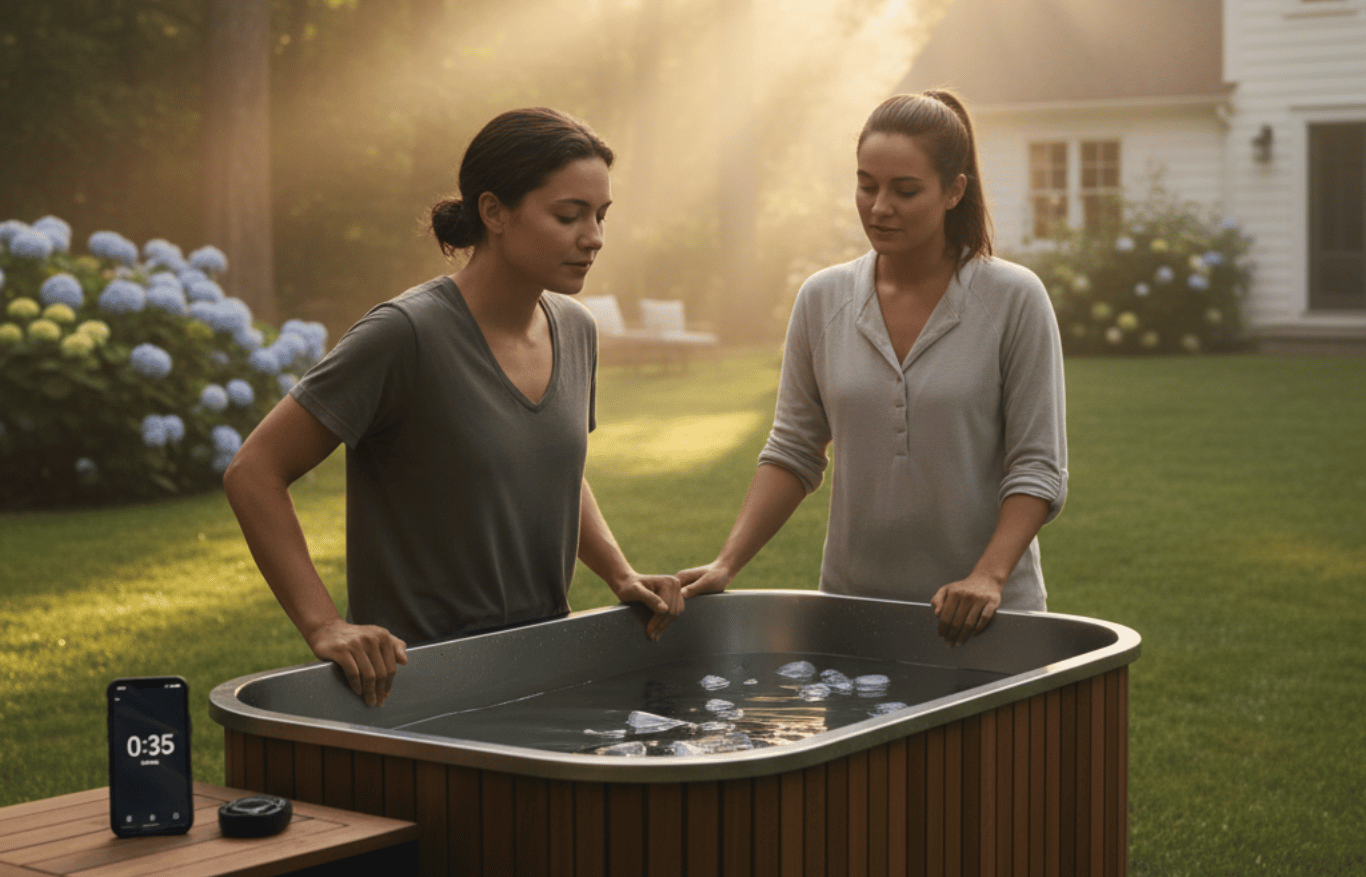
- Never plunge alone: Have someone with you just in case you get dizzy or start to feel unwell.
- Exit immediately if needed: Get out of the water fast if you feel lightheaded or if your body is shivering a lot and you can’t control it.
Who Should Avoid Hot to Cold Plunge Practices?
Cold exposure may not be safe for everyone. When the body gets cold fast, blood vessels get tighter. This causes blood pressure to go up and makes your heart work harder. The rise in heart rate and pressure gives your heart extra stress. This can be bad if you have certain medical conditions.
If you have heart disease, high blood pressure, or other heart problems, you should stay away from cold plunges. This is because the sudden changes make the heart beat faster and can put you at risk for serious problems. Cold plunging is not good for people who have diabetes, bad circulation, or Raynaud’s syndrome, either.
If you want to try a cold plunge routine, you should talk to your doctor first. They will look at your health history and any medicine you take. That way, you will know if cold plunging is safe for you.
How Long to Stay in a Cold Plunge Safely in the Morning
The safe duration for a cold plunge depends on the water temperature and your experience level. Beginners should always start with shorter durations to allow their bodies to adapt. Staying in for too long can lower your core body temperature and lead to hypothermia, which is a medical emergency.
As a rule, it’s best to keep your plunges quick. Aim for a maximum of five to ten minutes, even for experienced plungers. Listen to your body and exit if you experience discomfort beyond the initial cold sensation. Using a thermometer is a good way to monitor the water temperature.
Here’s a general guide for timing your plunge based on temperature and experience.
|
Experience Level |
Water Temperature |
Recommended Duration |
|---|---|---|
|
Beginner |
10°C to 15°C |
1 to 2 minutes |
|
Intermediate |
4°C to 10°C |
2 to 5 minutes |
|
Advanced |
Below 4°C |
3 to 5 minutes (max) |
Beginner’s Guide: How to Start a Cold Plunge Morning Routine
Are you ready to try cold plunging? You can start a cold plunge morning routine with a few easy steps. If you are new, be sure to get ready and slowly work your way into it.
This guide will help you understand all you have to know. You will learn about the equipment you need, and what to do to get your mind and body ready for your first cold plunge. So, let’s help you get started on your cold plunging path.
Essential Equipment Needed for a Home Cold Plunge Setup
You don’t need a lot to begin a cold plunge at home. The easiest way is to use your bathtub and some ice. But if you want to do this more often, it’s good to have a few things to help you.
If you use your own cold plunge tub, you can keep and set the water temperature with no trouble. Using cold plunge tubs made for home is the best way, as they last long and work well. For your setup, you need:
- A tub: This could be your bathtub, a stock tank, or a special ice bath tub.
- Ice: Three big bags of ice from the store are enough for a tub.
- A thermometer: This is great to check the water temperature.
These basics help you get started with a cold plunge, ice bath, and let you use your tub at home the way you want. A thermometer can show you how cold the water is so you get the most out of your cold plunge.
Preparing Yourself Physically and Mentally
Getting ready for a cold plunge is about training your mind as well as your body. You need to tell yourself that the first feeling of discomfort will pass. When you decide to go in, it helps you get past any hesitation you may have. Doing this also helps build your mental resilience.
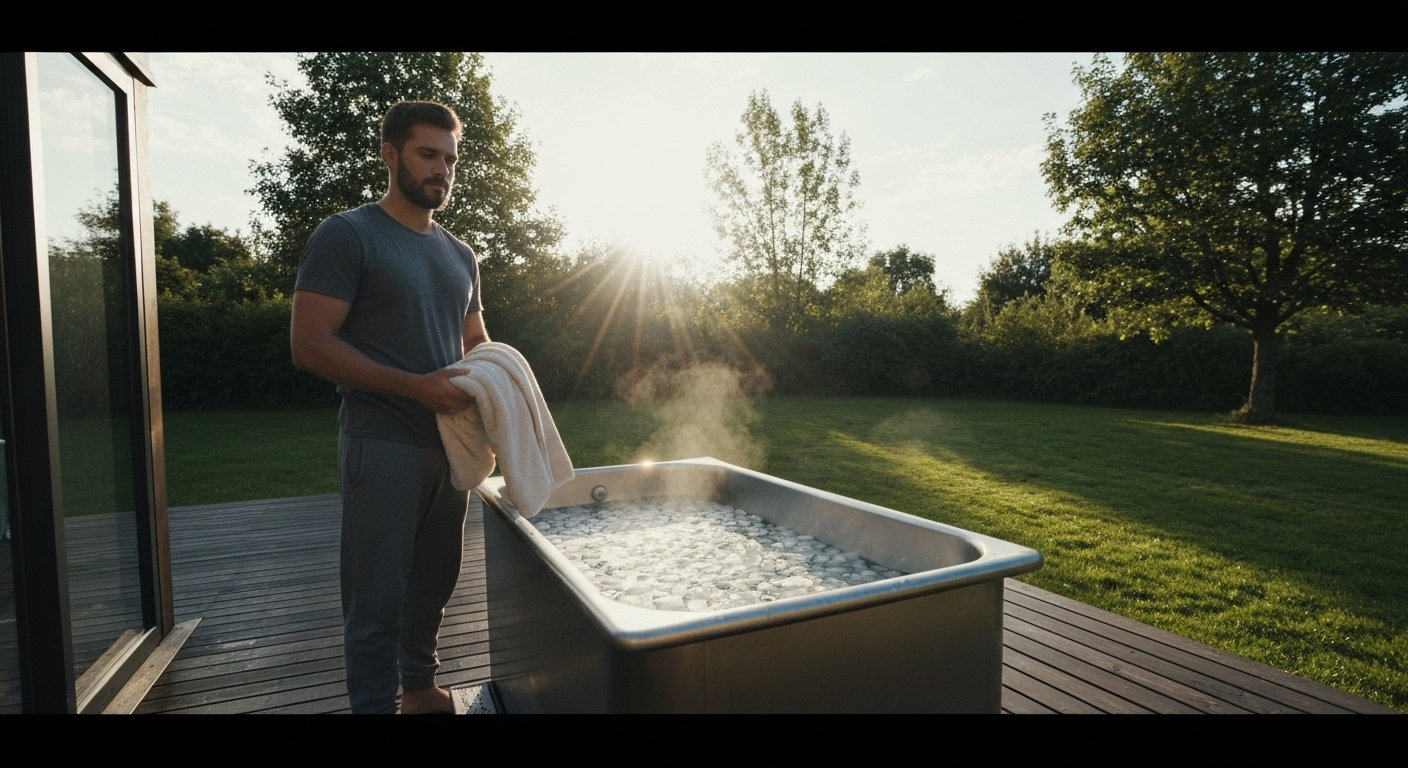
For your body, make sure you have a towel and some warm, dry clothes nearby for after you get out. You will want to get warm right after the cold plunge. It’s best not to do any strong physical activity just before, because your body should be calm at the start.
One good way to make the plunge easier is to pay attention to your breathing. Take some slow, deep breaths before you go in. This can help with the first shock you feel and keep your body from going into fight-or-flight mode, which makes your cortisol levels go up.
Step-by-Step Guide to Your First Cold Plunge
Taking your first cold plunge might seem a bit scary, but breaking it into small, easy steps can help you get started. You do not need to jump into an ice bath on your first try. A cold shower can be a good way to begin with cold water.
This guide will help you pick the right way, show you how to get into and out of the cold water, and make sure your first cold plunge is safe and works well. Follow these steps so your first time using a cold shower, cold plunge, or ice bath goes well and is safe.
Step 1: Choosing the Best Way to Cold Plunge at Home
If you are new to this, you have a few good ways to start your morning cold plunge at home. You do not have to buy any expensive things right away. The best thing to do is use what you already have.
A cold shower is a simple way to begin. This helps your body get used to cold water without putting your whole body in all at once. You can also use your bathtub for a cold bath. Add ice to cold water to make your own ice bath.
- Cold Shower: A good way to help your body handle cold water.
- Bathtub Ice Bath: This is easy and many people have what they need at home to do a full cold plunge.
- Dedicated Cold Plunge Tubs: These give the best and most steady cold plunge you can get.
You can pick what fits you. Try each and see which one works best for you.
Step 2: Setting Up the Ice Bath and Adjusting Temperature
Once you pick how you want to do your cold plunge, you will need to get your ice bath ready. If you use the bathtub, start by filling it halfway with cold water. Then, drop in your ice cubes. Three big bags of ice should be enough to make the water much colder.
If you are a beginner, the best water temperature for a morning cold plunge is between 10°C and 15°C (50 to 60 degrees Fahrenheit). Use a thermometer to check the water before you get in.
- Fill the tub with cold water first.
- Add ice slowly until you get to your target cold water temperature.
- Always use a thermometer to make sure the temperature is right.
Step 3: Entering, Timing, and Exiting Your Cold Plunge Safely
Go into the cold water slowly. This helps you avoid the shock that can make you breathe fast. Try to keep your breath steady as you get your body in the water. It is normal to feel some discomfort at first, but your breathing will settle in a few moments.
For your first cold water dip, timing is important. Stay in the water for only 30 to 60 seconds. This short duration lets you start to get the benefits but will not be too much for your body. As you start to feel good with it, you can slowly make your time in the water longer.
When it is time to get out, do it slowly and with care. Dry your body right away, and put on warm clothes so you help your body warm up without stress. Do not jump straight into a hot shower, because this big temperature change can be hard on your body.
Making Your Morning Cold Plunge More Comfortable
Let’s be honest. Cold plunges are not easy. That first shock and all the shivering come with it. This is just part of what happens. But, there are some ways to help with the discomfort and make it better, especially for new cold plungers.
You can use a few simple ideas to get into cold water and get used to it. The aim is to make it last over time, so you can get the long-term benefits.
Tips for Easing Into Ice Water Plunge Therapy
Getting used to ice water therapy feels better when you let the body adjust slowly. Do not make yourself stay too long right from the start. The body will take time to get more strength against the cold.
Begin with shorter durations in water that is a bit warmer. Spending a few minutes in water at 15°C can work well. When you become comfortable, you can make the water colder and stay in longer. Here are some ways to help:
- Start with your extremities: Put the hands and feet in the ice water first before the rest of your body.
- Focus on your breath: Breathe in and out slow and steady to calm the nervous system.
- Stay consistent: Do daily plunges, even if they are short. The body will get used to it faster compared to long ice water plunges done only sometimes.
This method helps to build resilience and makes each cold session easier over time.
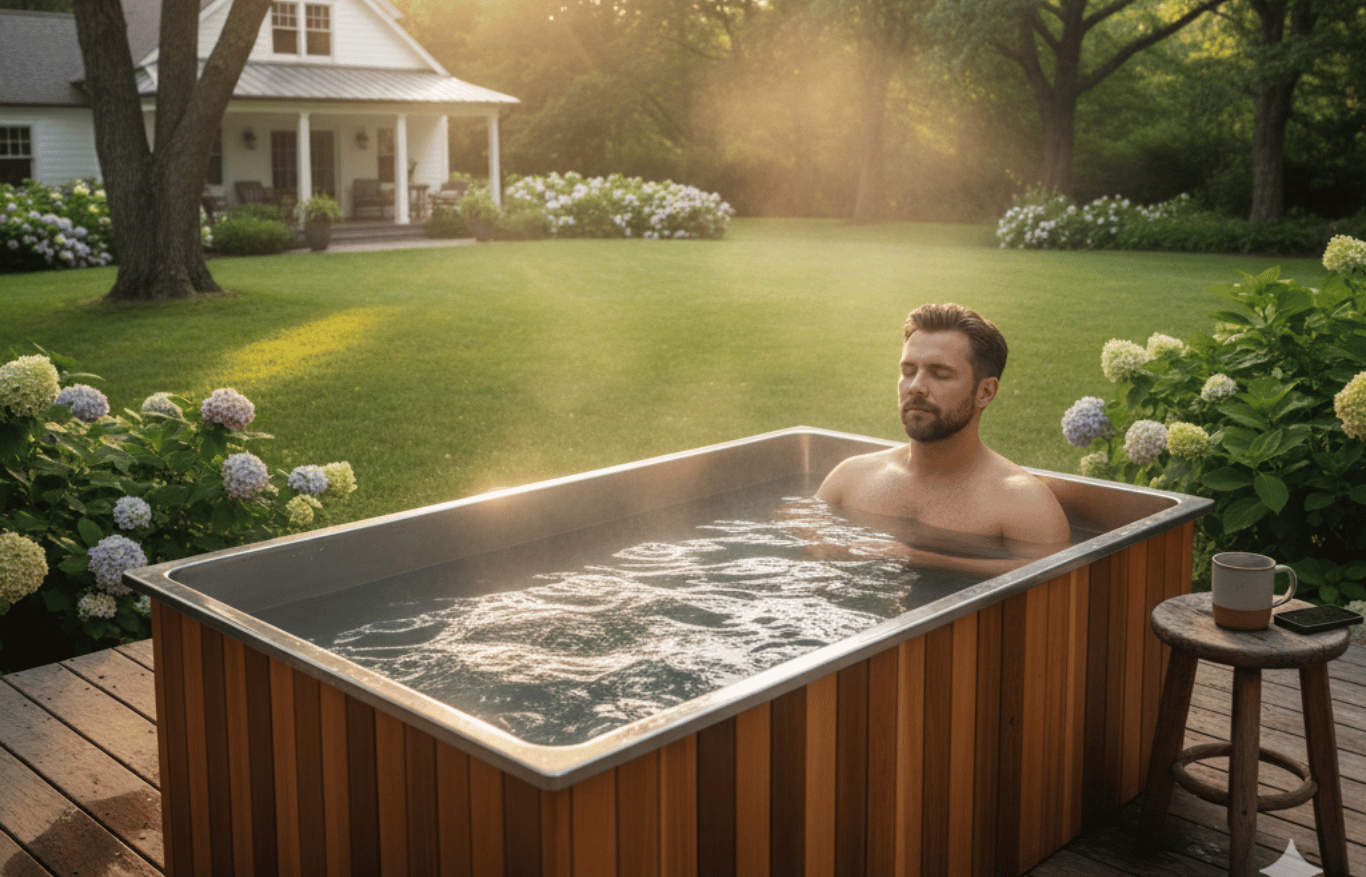
Should You Eat or Drink Before a Cold Plunge?
It’s not a good idea to eat a big meal right before a cold plunge. This makes your body work hard, and it can change your blood pressure and blood flow. When you eat, your body uses energy and needs good circulation. Having two big tasks at the same time is not the best choice.
In the morning, it’s good to drink a small glass of water. Don’t eat a heavy breakfast before you do a cold plunge. When your stomach is not full, the cold feels better for most people. It helps your body pay attention to the cold instead of food.
After you finish your plunge, you can drink a warm beverage. This is a good way to warm up your body. Don’t jump into a hot tub or sauna right away. Going from cold to very hot can be a big shock for your body and may not be safe for your blood flow and blood pressure.
Comparing Hot Cold Plunge to Other Wellness Practices
Cold plunging gives the body some benefits you do not get from other wellness habits. If you try a sauna or hot tub, the heat helps you relax. But a cold plunge wakes you up fast with a cold shock. You can also use a sauna and then the cold tub, which people call contrast therapy. This can help with the body’s circulation.
When you look at strength training, a cold plunge does not do the same job. Some research tells us not to take an ice bath or use cold plunging right after strength training. This may slow muscle growth. But the body does well with a cold plunge after long endurance workouts, as it helps cut down on soreness.
For mental health and wellness, jumping into a cold tub or using an ice bath gives a sudden boost to your alertness and your mood. This feeling is not the same as the calm the body gets from yoga or meditation. A cold shock builds resilience and helps you start the day with good focus.
Why Eco Hearth Ice Baths Are the Best Choice for Ireland
When you want to start a cold plunge routine and stick with it, having the right gear is the key. Eco Hearth ice baths are made to give you the best cold water therapy in your own home. This cold plunge tub is the top pick for those in Ireland who want to try this wellness trend.
Eco Hearth cold plunge tubs are built to handle the Irish weather. They are strong and work well. You can keep the water at the right cold temperature, so you get all the good things from each cold plunge in a safe and easy way.
Unique Features of Eco Hearth Baths for Morning Routines
Eco Hearth cold plunge tubs are made to help you with your wellness every morning. The tubs have special features to make cold therapy easy and nice for you. You do not have to guess anything with our baths. They help you get the most out of your cold plunge at home.
We work hard to give you a smooth experience with every use. The tubs have strong insulation. This keeps the water temperature the way you want it for a long time. You save both time and effort. You can hop into your ice bath when you want. Here are some key features:
- Eco-friendly design: Uses materials that are good for the environment to lower its impact.
- Advanced insulation: Holds the water temperature, so your water stays cold longer and uses less ice and less energy.
- User-friendly controls: Helps you pick and keep the body temperature that is just right for you.
These cold plunge tubs make it simple for you to add cold therapy to your wellness routine every day.
Durability, Safety, and Irish Climate Suitability
Choosing an ice bath that can handle the weather is important. Our tubs are made for the Irish climate, so you get a long-lasting, strong ice bath. Eco Hearth baths stay tough over time and give you cold water therapy whenever you want. This helps keep your wellness routine going all year.
Safety comes first for us. These tubs have non-slip surfaces, and you will find the controls easy to use. Your cold plunge is safe, so you get to focus on what matters, like lowering swelling and inflammation from your body. You do not need to worry while you relax in the cold water.
Getting an Eco Hearth bath is a good move for your health. The strong build lets you trust it every single day. If you want a cold plunge or ice bath for your home in Ireland, it is the setup for you.
Expert Recommendations and Customer Reviews
Wellness experts in Ireland say Eco Hearth is a top choice for people who want to add cold plunge to their daily life. They talk about how the quality, how reliable the tubs are, and how well they work. This makes it easy for everyone to get health benefits and feel good.
Customer feedback is strong. People say their mental health gets better, they have more energy, and their bodies recover faster. A lot of customers also share that doing a cold plunge in the morning helps their immune system and makes them feel better as a whole.
With an Eco Hearth bath, taking a cold plunge when you wake up is safe and works really well. Join others who use our premium ice baths to change the way their mornings feel, and to help with their health and wellness.
Conclusion
In the end, adding a cold plunge to your morning can bring many good health benefits. It can help boost your energy and improve mental clarity. To start with this new routine, you should know that being ready is important. You need the right know-how and tools so your cold plunge is safe and feels good. Eco Hearth ice baths are built with features that fit the Irish climate. Their strong build and safety make them great for your morning ritual. This practice helps with wellness and can get your day off to a good start. If you want to begin, reach out to find out how we can help you get used to the cold plunge.
Frequently Asked Questions
Can a cold plunge morning routine boost productivity for beginners?
Yes, a cold plunge in the morning can help you be more productive. The cold water gives you a shock that makes you more alert. It also helps your mind feel clear. When this happens, your body releases dopamine. This keeps your focus strong. With these things together, you will start your day feeling sharp, motivated, and ready to get things done.
Is it safe to do an ice water plunge every day?
For many people who do not have health conditions, doing cold water immersion every day can be safe after your body gets used to it. But, you should start with cold water a few times each week, maybe 2-3 days. It is important to pay attention to how you feel, so you the do not stress your body too much or get hypothermia.
What is the ideal temperature for a morning cold plunge?
The best water temperature for a cold plunge in the morning is between 10-15°C or 50-60 degrees Fahrenheit. This is good for beginners. People who have tried this more often may go for colder water. Always use a thermometer to check the water temperature. You should slowly make the water colder as you get used to it.
How does hot to cold plunge therapy compare with regular cold plunges?
Hot to cold plunge therapy is also called contrast therapy. In this method, you move between a sauna or hot tub and cold water. This can help boost circulation in your body. It may also affect blood pressure and soreness in your muscles in a way that is different from using only a cold plunge tub.